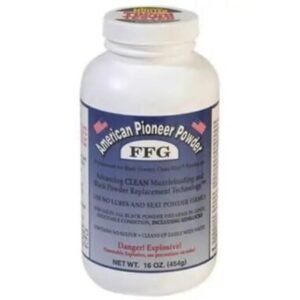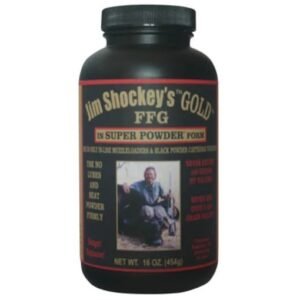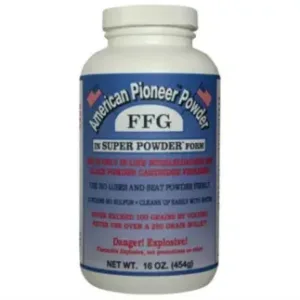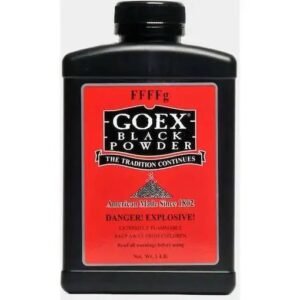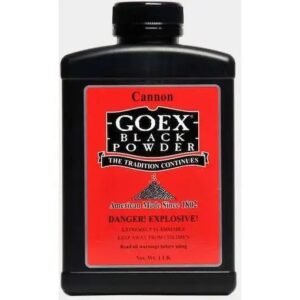
Black powder remains the foundational chemical propellant in the history of firearms, serving as the sole driving force behind projectile weapons for over six centuries before the advent of modern nitrocellulose propellants. Today, authentic black powder occupies a revered position in the shooting sports, powering traditional muzzleloaders, vintage black powder cartridge firearms, Cowboy Action Shooting matches, historical reenactments, and competitive muzzleloading disciplines. Engineered to deliver authentic smoke signatures, soft pressure impulses, and dependable ignition even from the faint spark of a flint strike, black powder provides a direct connection to historical craftsmanship and classic ballistic science.
The Chemical Composition and Combustion Dynamics of Black Powder
Authentic black powder is a mechanical mixture rather than a modern chemical compound, prepared in an exact ratio that has remained largely standardized since the 18th century: 75% potassium nitrate (saltpeter), 15% charcoal, and 10% sulfur. The quality and source of the charcoal—frequently sourced from softwoods like willow or alder—directly dictate the combustion velocity and chemical responsiveness of the finished propellant.
Unlike modern smokeless powders that detonate or deflagrate at rates highly dependent on chamber pressure, black powder burns at a relatively steady deflagration rate regardless of confinement. Its combustion produces a relatively gentle, progressive pressure curve with a lower peak chamber pressure, making it safe for use in antique firearms, damascus twist barrels, and historically styled muzzleloading replicas. Approximately 44% of a black powder charge converts into gas (primarily carbon dioxide, carbon monoxide, and nitrogen), while the remaining 56% manifests as dense solid particulate matter, producing the iconic white smoke cloud, distinct sulfurous aroma, and characteristic black bore fouling.
Standard Granulation Grades and Sizing of Black Powder
The burning speed of black powder is regulated mechanically by grain size rather than chemical deterrent coatings. Manufacturers sort corned black powder through precision brass sieves, categorizing grains using the traditional “F” (fine) designation:
-
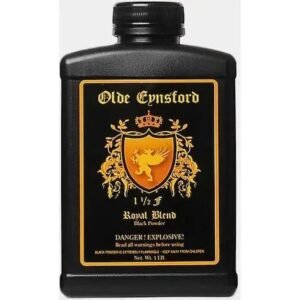
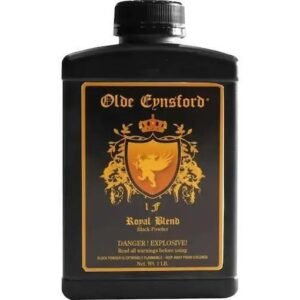
Cannon and Fg (1F) Black Powder: The coarsest standard granulations available, designed for large-bore artillery, antique cannons, heavy naval swivel guns, and shoulder arms with bores exceeding .75 caliber. The large grains burn slowly, moderating chamber pressure in massive barrels.
-
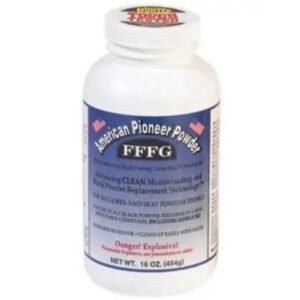
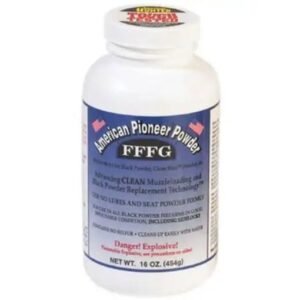
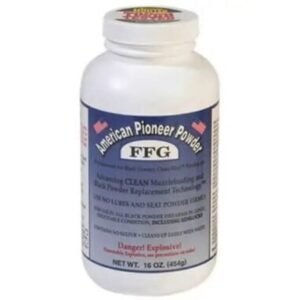
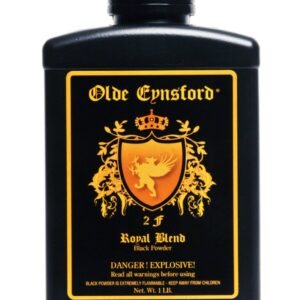
FFg (2F) Black Powder: The standard grade for medium-to-large centerfire rifle muzzleloaders (.50 to .58 caliber), large black powder cartridges (such as .45-70 Government and .50-90 Sharps), and 10-, 12-, and 16-gauge black powder shotguns. It balances robust velocity with manageable bore fouling.
-
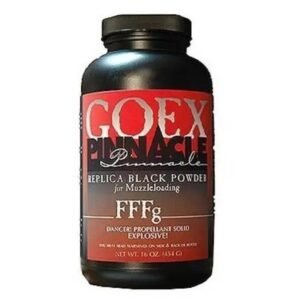
FFFg (3F) Black Powder: A finer, faster-burning granulation optimized for smaller rifle calibers (.32 to .45 caliber), black powder cap-and-ball revolvers, single-shot pistols, and modern 20- and 28-gauge muzzleloading shotguns. 3F produces slightly higher velocities and cleaner initial combustion in shorter barrel lengths.
-
FFFFg (4F) Black Powder: An ultra-fine, highly sensitive granulation strictly reserved as priming powder for the flashpans of flintlock firearms. Because of its microscopic surface area, 4F flashes almost instantaneously upon contact with the sparks thrown by the frizzen, igniting the main bore charge without noticeable ignition delay.
Authentic Black Powder vs. Modern Propellant Substitutes
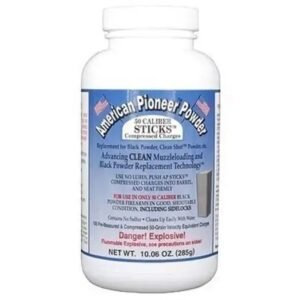
While synthetic black powder substitutes (such as those based on ascorbic acid or potassium perchlorate) offer convenience, traditional black powder retains distinct ballistic advantages:
-
Flintlock Reliability: Traditional black powder features an ignition temperature of approximately 480°F (249°C), significantly lower than most synthetic substitutes. This low thermal threshold is mandatory for flintlock mechanisms, where sparks cannot reliably ignite modern synthetic alternatives.
-
Uniform Internal Ballistics: Authentic black powder generates exceptionally consistent shot-to-shot chamber pressures and velocity spreads when loaded by volume, ensuring consistent point of impact during precision long-range muzzleloader competitions.
-
Historical Fidelity: For living history organizations, National Muzzle Loading Rifle Association (NMLRA) competitors, and Single Action Shooting Society (SASS) participants, the signature acoustic boom, flame flash, and lingering smoke cloud of genuine black powder cannot be matched by modern synthetics.
Safe Handling, Volumetric Loading, and Maintenance of Black Powder
Because black powder is chemically classified as a low explosive (DOT Class 1.1D) rather than a flammable solid, it requires strict adherence to safety protocols. Unlike smokeless powder, black powder is sensitive to friction, static electricity, and impact. Handloaders and muzzleloader shooters must always measure charges using volumetric powder measures calibrated in grains equivalent—never weighing charges directly on digital scales without verifying volume, and never pouring directly from a horn or flask into a hot barrel.
The combustion byproducts of black powder contain potassium carbonate, potassium sulfate, and potassium sulfide, which are hygroscopic salts that actively absorb atmospheric moisture to form corrosive acids. Post-shooting bore maintenance is critical: barrels and breechblocks must be thoroughly swabbed with warm soapy water or dedicated water-based black powder solvents, dried completely, and treated with non-petroleum lubricants to prevent corrosion and keep rifling sharp for generations.