
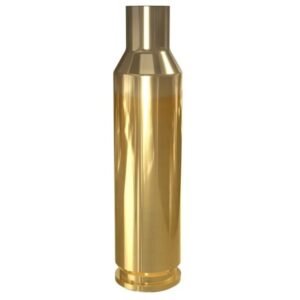
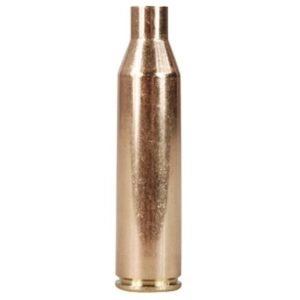
Quality reloading brass serves as the critical containment vessel and dimensional baseline of every custom cartridge, dictating overall system safety, velocity consistency, and downrange precision. Whether assembling ultra-tight extreme spread loads for precision benchrest competition or running bulk production for high-volume tactical training, the integrity and uniformity of your cartridge cases determine the absolute performance ceiling of your ammunition.
The Foundation of Ballistic Accuracy: Why Reloading Brass Matters
Every shot fired initiates a violent expansion cycle where the cartridge case seals the chamber against tens of thousands of pounds of pressure per square inch. Premium reloading brass ensures this expansion—and the subsequent contraction—occurs with total mechanical repeatability. Uniform wall thickness, precise concentricity from head to neck, and tight internal volume tolerances directly govern how consistently the powder charge ignites and burns.
When internal case capacities fluctuate across a lot, pressure curves vary unpredictably, leading to erratic muzzle velocities and vertical dispersion on target. High-grade reloading brass minimizes standard deviation (SD) and extreme spread (ES), providing competitive long-range shooters and hunters with the ballistic stability required to hold tight groups at extended distances.
Metallurgy and Manufacturing Standards of Reloading Brass
Metallic cartridge cases are primarily drawn from classic 70/30 cartridge brass—an alloy of 70% copper and 30% zinc engineered for a precise balance between tensile strength and ductility. Premium reloading brass features a deliberate hardness gradient across the case body:
-
The Case Head and Web: Tempered hard to withstand repeated ignition pressures, preserve primer pocket dimensions, and prevent extractor groove deformation during aggressive extraction in semi-automatic platforms.
-
The Case Walls: Calibrated to absorb dynamic expansion while maintaining structural rigidity to prevent blowouts or thinning near the web.
-
The Case Neck and Shoulder: Annealed to a softer, more pliable state, allowing the neck to expand instantly upon ignition to create an airtight gas seal (obturation) against the chamber wall before springing back cleanly for extraction.
Virgin Reloading Brass vs. Once-Fired Reloading Brass
Choosing the right cartridge cases depends on your firearm platform, production volume, and shooting discipline.
-
Virgin Reloading Brass: Unfired, factory-fresh brass provides a clean baseline. Because the metal has never experienced chamber fire-forming or mechanical sizing stress, it offers consistent neck tension and pristine primer pockets right out of the box. Virgin reloading brass is the benchmark for precision bolt-action rifles, ELR (Extreme Long Range) platforms, and exacting load development.
-
Once-Fired Reloading Brass: Sourced primarily from controlled range environments or military surplus lots, once-fired reloading brass is a cost-effective alternative for high-volume handgun and semi-automatic rifle shooters. While it requires thorough initial processing—such as full-length resizing, swaging crimped primer pockets, and uniform case trimming—it delivers high-volume functionality for action shooting and tactical practice.
Processing and Maintenance to Maximize Reloading Brass Longevity
Quality reloading brass is an investment designed to yield multiple firing cycles when properly prepped and monitored. Routine maintenance begins with thorough cleaning through wet rotary tumbling using stainless steel pins or dry vibratory media to strip away carbon fouling and primer residue. After cleaning, consistent measurement ensures cases remain within maximum SAAMI length specifications to prevent high-pressure chamber binding.
Repeated firing and resizing cycles work-harden the brass, making it brittle over time. Periodic annealing restores ductility to the case neck and shoulder, preventing premature neck splits and maintaining predictable bullet release tension. Paired with methodical inspections for loose primer pockets and signs of internal web thinning, proper case maintenance ensures your reloading brass delivers reliable, safe performance across dozens of trips to the range.









Recently Viewed Products
-
 Original price was: $147.54.$54.50Current price is: $54.50.
-
 Original price was: $219.99.$113.00Current price is: $113.00.
-
