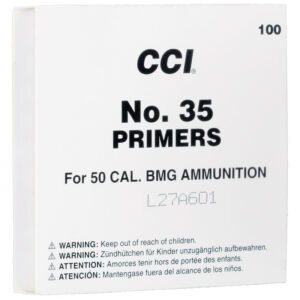
Reloading primers serve as the primary ignition source and spark plug of modern metallic cartridge and shotshell handloads, converting the kinetic strike of a firing pin into the thermal flame front required to combust smokeless powder. Positioned in the center of the cartridge case head, primers must perform two high-pressure tasks simultaneously: instantaneously ignite the propellant charge with complete thermal consistency while expanding outward to create an airtight gas seal against the primer pocket walls. From high-volume pistol rounds running on progressive presses to benchrest rifle cartridges where single-digit standard deviations dictate podium finishes, choosing and seating the correct primers is a foundational step in safe, precision handloading.
The Anatomy and Chemical Dynamics of Modern Primers
Modern centerfire Boxer primers consist of a compact, precision-engineered assembly: a drawn brass or nickel-plated cup, a formulated explosive pellet, a thin protective foil paper, and a stamped metal anvil. When the firing pin strikes the base of the cup, it pinches the sensitive priming compound against the internal anvil, causing mechanical shock that triggers instantaneous detonation. The resulting hot jet of incandescent particles and gas blasts through the case’s flash hole into the main powder reservoir.
Traditionally formulated around lead styphnate, barium nitrate, and antimony sulfide, modern primers deliver uniform flame temperatures and brisance (shattering power). For indoor shooting ranges and eco-conscious marksmen, lead-free and non-toxic primers utilize alternative chemical compounds like diazodinitrophenol (DDNP) to eliminate heavy-metal airborne residue without sacrificing ignition reliability or shelf life.
Sizing and Selection Standards Across Cartridge Primers
Centerfire primers are standardized into distinct dimensional categories, further divided into standard, magnum, and specialty match formulations:
-
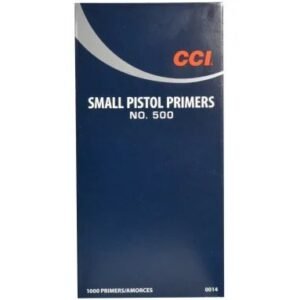
Small Pistol Primers: Measuring .175 inches in diameter, these are the standard ignition platform for popular handgun cartridges including 9mm Luger, .380 ACP, .38 Special, and .40 S&W.
-
Large Pistol Primers: Standardized at .210 inches in diameter, engineered for larger bore semi-automatics and revolvers such as .45 ACP, .44 Special, and standard-pressure hunting cartridges.
-
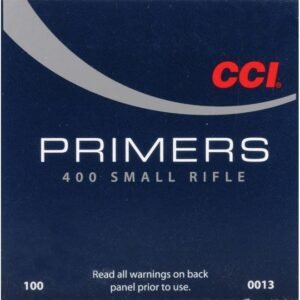
Small Rifle Primers: Sized at .175 inches with a thicker cup wall engineered to withstand chamber pressures exceeding 50,000 to 60,000 PSI, serving modern cartridges like .223 Remington/5.56 NATO, 6.5 Grendel, and 6mm ARC.
-
Large Rifle Primers: Sized at .210 inches with deeper cup dimensions and heavier chemical charges, designed for medium and large rifle rounds like .308 Winchester, .30-06 Springfield, and .270 Winchester.
-
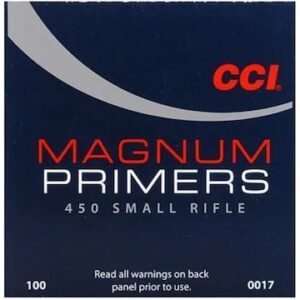
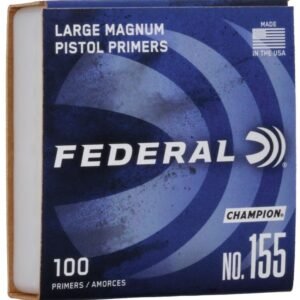
Magnum Primers: Featuring thicker cups and hotter, longer-duration flame jets, magnum primers are required to reliably ignite dense spherical ball powders, heavily compressed charges, or massive powder columns in magnum hunting cartridges and sub-zero weather conditions.
-
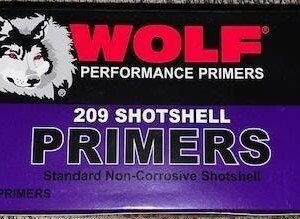
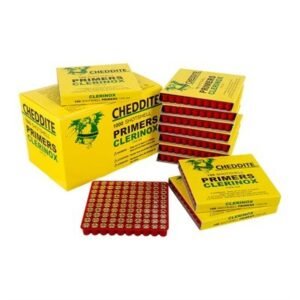
209 Shotshell Primers: Self-contained, flanged battery-cup primers designed specifically for shotgun hulls and modern inline muzzleloading rifles, delivering massive flame volume to ignite large propellant charges.
Benchrest Consistency and Military-Spec Primers
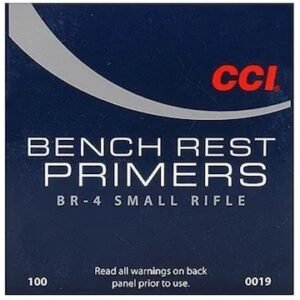
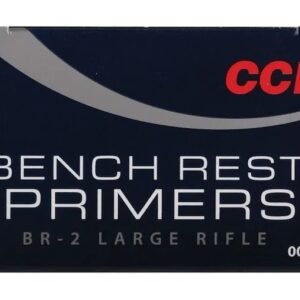
For precision long-range shooters, match-grade and benchrest primers are manufactured to the tightest dimensional and gravimetric tolerances. Dedicated assembly lines and seasoned operators ensure that the primer compound is dispensed with near-identical weight from cup to cup. This mechanical and chemical uniformity minimizes extreme spreads (ES) and velocity standard deviations (SD), preventing vertical stringing at 1,000 yards and beyond.
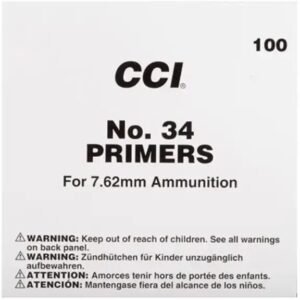
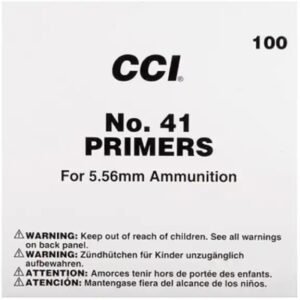
Conversely, military-spec primers—such as CCI No. 41 (Small Rifle) and No. 34 (Large Rifle)—are specifically engineered with harder cups and adjusted anvil angles. These features prevent out-of-battery slam-fires caused by the free-floating firing pins standard in military semi-automatic platforms like the AR-15, M1 Garand, and M1A/M14, ensuring tactical safety without compromising ignition reliability.
Seating Depth, Pocket Preparation, and Safe Storage of Primers
Proper mechanical seating is paramount to consistent ignition and overall reloading safety. Primers must always be seated firmly to the bottom of the primer pocket, positioning them between .002 and .005 inches below flush with the case head. A high primer can cause premature slam-fires, misfires from firing pin energy absorbing into seating the cup deeper, or failure to chamber properly in semi-automatic actions. Handloaders should systematically remove military crimps using primer pocket swagers or reamers and uniform pocket depths to ensure a repeatable seat.
Because primers are classified as sensitive explosive components, safe handling is mandatory. Never force primers into tight or obstructed pockets. Avoid exposing primers to oil, grease, or aggressive bore cleaners, which can deactivate the priming compound. Store primers in their original nested packaging—which physically isolates individual cups to prevent mass detonation—in a cool, dry environment away from heat sources and loose propellant canisters.








Recently Viewed Products
-
CMC Triggers Single Stage Tactical Trigger – 2-2.5lb Flat – 90503
Original price was: $120.00.$109.00Current price is: $109.00. -
-