Modern firearms represent the intersection of mechanical engineering, metallurgical precision, and ballistic science. Engineered to serve an expansive range of applications—from personal defense and tactical law enforcement to big-game hunting, clay target sports, and extreme-long-range benchrest competition—firearms provide shooters with dependable cycling, mechanical safety, and repeatable downrange accuracy. Whether selecting a compact polymer-framed pistol for everyday carry, a precision bolt-action rifle for extended distances, or a finely balanced shotgun for upland wingshooting, choosing the proper platform ensures that action type, caliber, and ergonomics align seamlessly with your intended shooting discipline.
Core Operating Platforms and Classifications of Modern Firearms
The landscape of contemporary firearms spans three foundational platform categories, each designed around distinct functional roles, handling characteristics, and operational parameters:
-
Handguns (Pistols and Revolvers): Primarily engineered for concealed carry, duty carry, and home defense. Modern semi-automatic pistols utilize striker-fired or hammer-fired actions housed in lightweight polymer or machined aluminum frames, offering high magazine capacities, rapid follow-up shots, and integrated accessory rails. Double-action and single-action revolvers provide traditional mechanical simplicity, chambering potent cartridges from standard .38 Special loads to high-pressure hunting magnums like .44 Remington Magnum and .454 Casull.
-
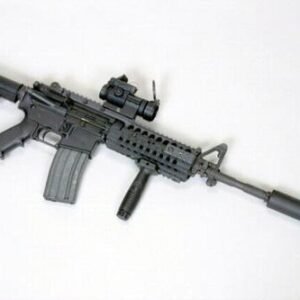
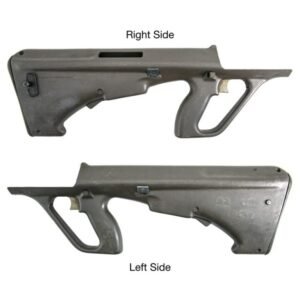
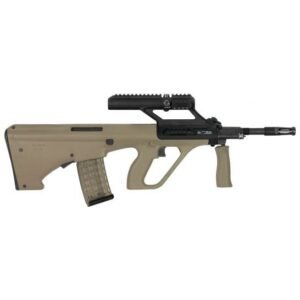
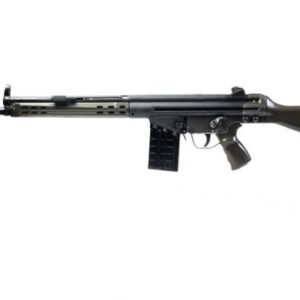
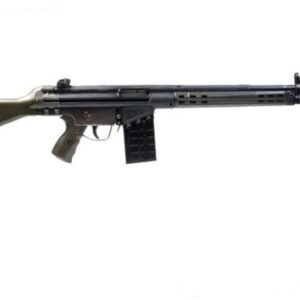
Rifles (Bolt-Action, Semi-Automatic, and Lever-Action): Designed for shoulder-mounted stability and maximum ballistic velocity over intermediate to extreme distances. Bolt-action rifles serve as the benchmark for hunting and long-range precision due to their rigid receiver lockup and minimal moving parts. Modern sporting rifles (semi-automatic platforms) offer modularity, mild recoil, and rapid cycling for predator control, home defense, and competitive action shooting. Lever-action rifles deliver fast manual cycling and robust handling for traditional hunting and straight-wall brush calibers.
-
Shotguns (Pump-Action, Semi-Automatic, and Break-Action): Renowned for their close-range versatility and multi-projectile payload delivery. Pump-action shotguns deliver mechanical reliability in adverse conditions, making them staples for tactical duty and home security. Semi-automatic shotguns utilize gas or inertia systems to reduce felt recoil, enabling fast split times in 3-Gun competitions and waterfowl blinds. Break-action over-and-under and side-by-side shotguns provide the balance and swing dynamics prized in skeet, trap, and sporting clays.
Metallurgy, Action Mechanics, and Manufacturing Quality in Firearms
The durability and operational life of firearms depend on advanced materials and precise machining tolerances:
-
Barrel and Receiver Construction: Premium modern barrels are forged from high-tensile 4140, 4150 chrome-moly, or 416R stainless steel, often finished with button-rifled, cut-rifled, or cold-hammer-forged rifling profiles to ensure tight concentricity and prolonged throat life. Receivers are typically CNC-machined from forged 7075-T6 aerospace-grade aluminum or solid steel billets, ensuring structural integrity under high chamber pressures.
-
Cycling Mechanisms: Modern action types are engineered to balance reliability with recoil mitigation. These include short-recoil tilting-barrel systems for handguns, direct-impingement or short-stroke gas pistons for tactical rifles, and inertia-driven or gas-regulated mechanisms for smooth-cycling shotguns.
-
Corrosion Resistance and Surface Coatings: Advanced metal treatments—such as black nitriding (QPQ), manganese phosphate, hard-coat anodizing, and ceramic Cerakote coatings—protect critical components against atmospheric moisture, barrel heat, and harsh solvent exposure.
Modular Customization and Ergonomics in Contemporary Firearms
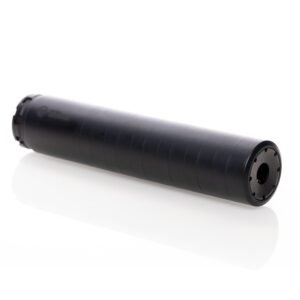
Modern engineering places a major emphasis on user adaptability and accessory integration across all firearm styles. Handguns increasingly feature factory slide cuts to directly mount micro red-dot optics, alongside interchangeable backstraps to fit various hand sizes. Rifles incorporate standardized mounting interfaces—such as M-LOK and Picatinny rails—allowing shooters to attach bipods, weapon lights, and thermal optics without gunsmithing. Threaded barrels have also become an industry standard, enabling the straightforward addition of muzzle brakes, compensators, and sound suppressors to manage recoil, eliminate muzzle rise, and protect hearing.
Safe Handling, Storage, and Maintenance Standards for Firearms
Safe ownership and peak performance of firearms require strict adherence to standard safety protocols and routine mechanical care:
-
The Universal Rules of Gun Safety: Always treat every firearm as if it were loaded; keep the muzzle pointed in a safe direction at all times; keep your finger straight and off the trigger until your sights are aligned and you have made the conscious decision to shoot; and always be sure of your target, what is in line with it, and what lies beyond it.
-
Routine Cleaning and Care: After shooting, firearms should be field-stripped according to manufacturer manuals, swabbed with bore solvents to clear copper, lead, and carbon buildup, and treated with a light application of quality synthetic gun lubricant to prevent frictional wear on moving surfaces.
-
Secure Storage: Store all firearms unloaded in dedicated, heavy-gauge steel gun safes, security cabinets, or biometric lockboxes, protected with desiccants or active dehumidifiers to prevent surface oxidation and prevent unauthorized access.